
CATALOG Your COLLECTION
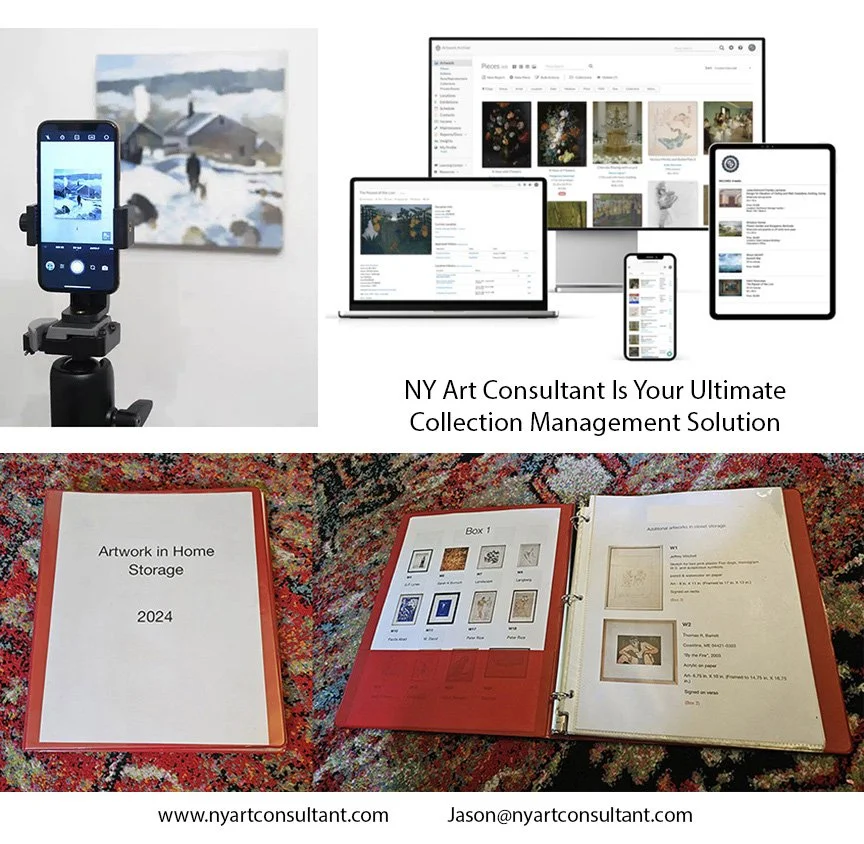
Accessible on Your Mobile Phone, Tablet and Desktop
Your Fine Art or Antiquities Collection — Cataloged, Organized, Valued, and Accessible on Your Phone or Tablet
Every collection tells a story, and now is the right time to ensure that story is documented with clarity, confidence, and care. A well-organized art collection catalog not only preserves a collection’s legacy for future generations, but also enhances its present-day enjoyment, accessibility, and long-term value. Whether you are refining a contemporary art or antiquities collection, cataloging inherited works or recent acquisitions, or seeking professional appraisals for insurance, estate planning, or advisory use, I offer private, personalized consulting services tailored to each collector’s goals.
My practice operates largely through referrals and is intentionally limited in scale. Engagements integrate smoothly with legal, financial, and insurance teams and are handled with discretion, care, and precision.
I work with collectors to ensure their collections are properly documented, protected, and positioned for long-term stewardship and my role is to consolidate art and antique collections into coherent, defensible systems replacing fragmented spreadsheets, outdated PDFs, and image folders with a single, intelligible catalog framework that brings clarity, order, and lasting usefulness without disrupting existing advisory relationships.
Services include on-site photography, provenance research, condition reporting, location history, and USPAP-compliant appraisals, resulting in a comprehensive catalog maintained in secure digital and print formats, with controlled access available by phone or tablet anywhere, at any time.
As an art collector myself, I understand the practical and personal considerations involved in responsible stewardship. If this is of interest to you or someone you know, I would be happy to offer a complimentary consultation.
5 important reasons to organize and catalog your art collection now.
1. Whether you’re an artist or a collector, chances are that you have a lot of art around the house, office or studio. You’ve probably said to yourself on many occasions that it’s time to get organized and make sure everything is accounted for. Often the task can begin to feel overwhelming so the project gets postponed. In reality there’s no better time than now to get organized. The longer you wait to get things in order the greater the chances of something getting damaged or lost.
2. One big misconception is that collection catalogs are only for large collections. Even collectors just starting out will benefit from organization. Collecting can be a life-long journey, a labor of love, and sometimes produces return on investment. Documenting the history, location and condition of your collection is essential for peace of mind and can be vital for insurance and de-acquisition purposes.
3. As your collection grows, it’s often the case that your acquisitions become divided between multiple residences, offices, storage spaces or other locations. Keeping an accurate record of the whole collection including the location and shipping history can make it simple to keep track of where everything is.
4. For many pieces, you may have a story you wish to remember, either about the process of purchasing the art, something about the artist, or even details about the subject matter itself. Recording the provenance of your investments adds to their value and can be an important resource when considering re-sales or gifting work from your collection.
5. The devastation wrought by hurricane Sandy and other natural disasters should be enough to convince collectors of any level of the importance of documenting their collections. Collections management is an ongoing process and documentation needs to be kept up-to-date and stored away from home in a safe place. The most efficient way to organize your precious investments is to hire an experienced professional.
Copyright © 2025 Jason Patrick Voegele. All Rights Reserved